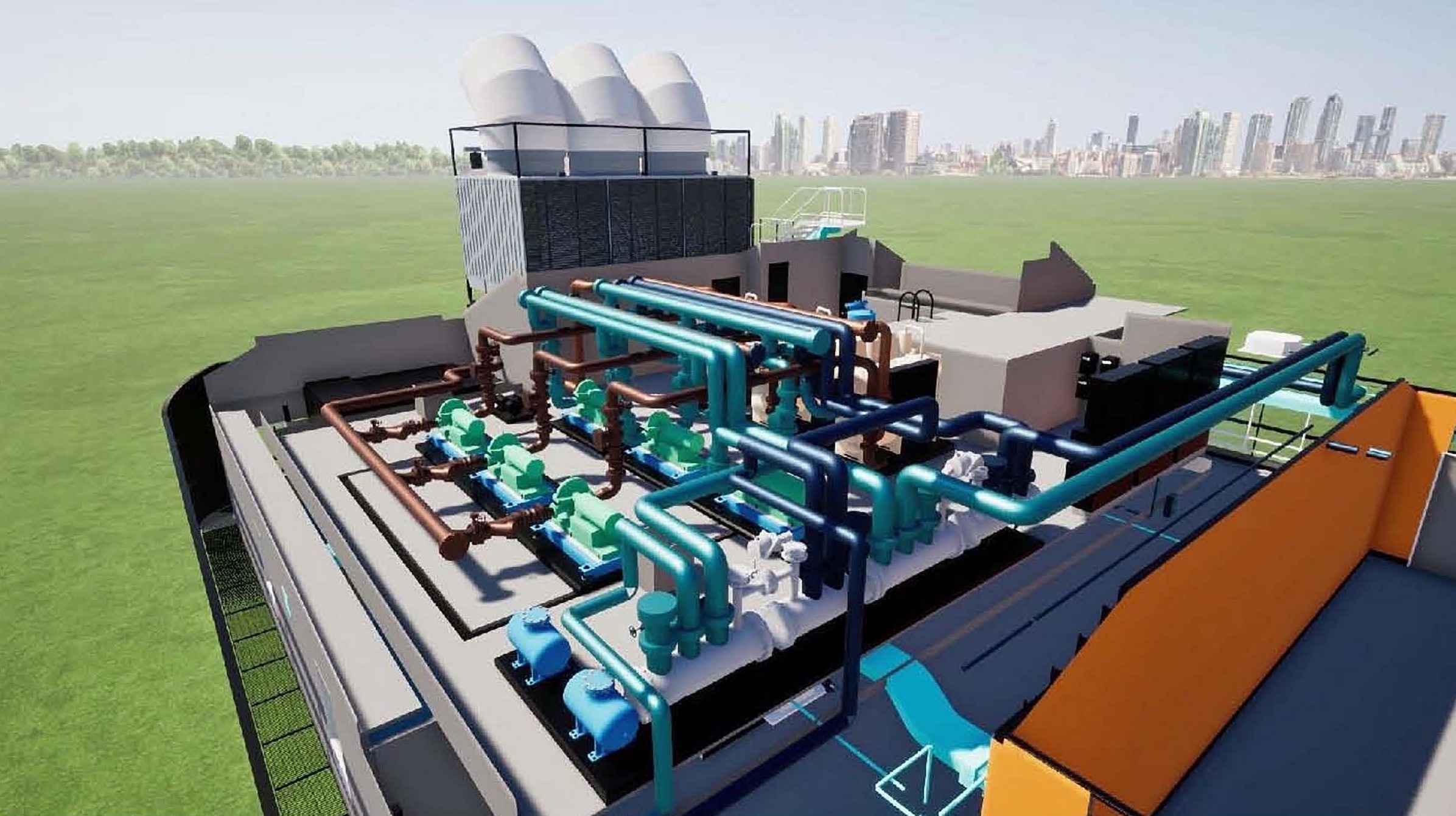
อาคารที่ทำการสภาวิศวกรแห่งใหม่ ตั้งอยู่บนถนนลาดพร้าว กรุงเทพมหานคร เป็นอาคาร 7 ชั้น มีพื้นที่ใช้สอยประมาณ 9,000 ตารางเมตร ซึ่งระบบปรับอากาศและระบายอากาศมีสัดส่วนการใช้พลังงานสูงถึง 70% ของพลังงานรวมทั้งอาคาร ทีมวิศวกรของบริษัท เน็กส์ ทูเอ็นดี จำกัด จึงออกแบบระบบผลิตน้ำเย็นแบบพิเศษที่เรียกว่า DTDL (Dual Temperature Dual Loop Chiller Plant) ซึ่งเป็นการแยกวงจรน้ำเย็นออกเป็น 2 วงจร ได้แก่ วงจรอุณหภูมิต่ำสำหรับเครื่อง DOAS และห้องเซิร์ฟเวอร์ที่อุณหภูมิคงที่ 7.2°C และวงจรอุณหภูมิสูงสำหรับพื้นที่สำนักงานทั่วไปที่ปรับอุณหภูมิตามสภาวะอากาศภายนอกในช่วง 7.2–10°C ส่งผลให้ได้ค่าประสิทธิภาพพลังงานเฉลี่ยทั้งปีที่ 0.471 kW/TON และอาคารได้รับการรับรองมาตรฐาน TREES ระดับ Platinum
The new Council of Engineers (COE) Thailand headquarters, located on Ladprao Road, Bangkok, is a 7-storey building with approximately 9,000 sqm of usable floor area. HVAC systems account for up to 70% of total building energy consumption. The Next 2nd Co., Ltd. engineering team designed a specialized chiller plant known as DTDL (Dual Temperature Dual Loop Chiller Plant), which separates the chilled water circuit into two independent loops: a fixed low-temperature loop at 7.2°C serving DOAS units and server rooms requiring precise dehumidification, and a variable high-temperature loop ranging from 7.2–10°C serving general office areas. This innovation achieves an annual average plant efficiency of 0.471 kW/TON and earned the building TREES Platinum certification — one of the highest efficiency ratings for a chiller plant of this scale in Thailand.
ntroduction
บทนำ — ความท้าทายด้านพลังงานในภูมิอากาศร้อนชื้น Introduction — Energy Challenges in Tropical Climateอาคารสาธารณะและอาคารสำนักงานในประเทศไทยต้องเผชิญกับความท้าทายด้านพลังงานที่รุนแรงเป็นพิเศษเมื่อเทียบกับประเทศในเขตอบอุ่น เนื่องจากประเทศไทยตั้งอยู่ในเขตภูมิอากาศร้อนชื้นใกล้เส้นศูนย์สูตร (Tropical Climate) อุณหภูมิและความชื้นสูงตลอดทั้งปี ส่งผลให้ระบบปรับอากาศและระบายอากาศต้องทำงานหนักและต่อเนื่อง จากข้อมูลการศึกษาด้านพลังงานอาคารในประเทศไทย พบว่าระบบ HVAC มีสัดส่วนการใช้พลังงานสูงถึงประมาณ 70% ของพลังงานไฟฟ้ารวมทั้งอาคาร ซึ่งสูงกว่าอาคารในประเทศแถบยุโรปหรืออเมริกาเหนืออย่างมีนัยสำคัญ
Public and office buildings in Thailand face particularly acute energy challenges compared to those in temperate climates. Situated near the equator in a tropical climate zone, Thailand experiences high temperature and humidity year-round, demanding continuous and heavy operation of HVAC systems. Studies on building energy performance in Thailand consistently show that HVAC systems account for approximately 70% of total electrical energy consumption — significantly higher than the proportion seen in European or North American buildings where the climate is considerably cooler and drier.
อาคารที่ทำการสภาวิศวกรแห่งใหม่ (Council of Engineers Thailand — COE) ตั้งอยู่บนถนนลาดพร้าว กรุงเทพมหานคร เป็นอาคาร 7 ชั้น มีพื้นที่ใช้สอยประมาณ 9,000 ตารางเมตร อาคารนี้ต้องรองรับการใช้งานหลากหลายรูปแบบ ทั้งสำนักงานปกติ ห้องประชุม ห้องสอบ ห้องเซิร์ฟเวอร์ และพื้นที่ส่วนกลาง ซึ่งแต่ละพื้นที่มีความต้องการด้านความเย็นและการควบคุมความชื้นที่แตกต่างกันอย่างมีนัยสำคัญ โดยเฉพาะห้องเซิร์ฟเวอร์และระบบ DOAS (Dedicated Outdoor Air System) ที่ต้องการน้ำเย็นอุณหภูมิต่ำและคงที่เพื่อดึงความชื้นออกจากอากาศภายนอกก่อนเติมเข้าอาคาร ในขณะที่พื้นที่สำนักงานทั่วไปสามารถรับน้ำเย็นที่อุณหภูมิสูงกว่าได้โดยยังคงความสบายสำหรับผู้ใช้อาคาร
The new Council of Engineers Thailand (COE) headquarters building, located on Ladprao Road, Bangkok, is a 7-storey structure with approximately 9,000 square metres of usable floor area. The building must accommodate diverse functional requirements: standard offices, conference rooms, examination halls, server rooms, and common areas — each with substantially different cooling and humidity control demands. In particular, the server rooms and the DOAS (Dedicated Outdoor Air System) units require low, precisely controlled chilled water temperatures to dehumidify incoming outdoor air before it enters the building, while general office areas can accept higher chilled water temperatures and still maintain occupant comfort.
ในอดีต อาคารส่วนใหญ่ในประเทศไทยใช้ระบบผลิตน้ำเย็นวงจรเดียวอุณหภูมิเดียว ซึ่งมักกำหนดอุณหภูมิน้ำเย็นที่ประมาณ 7°C ตลอดเวลา เพื่อให้ระบบ DOAS สามารถดึงความชื้นได้เพียงพอ แม้ว่าในความเป็นจริงพื้นที่สำนักงานทั่วไปไม่จำเป็นต้องใช้น้ำเย็นที่อุณหภูมิต่ำขนาดนั้น การบังคับให้เครื่องทำน้ำเย็นผลิตน้ำที่อุณหภูมิต่ำตลอดเวลาทำให้สิ้นเปลืองพลังงานโดยไม่จำเป็น โครงการอาคารสภาวิศวกรจึงเป็นโอกาสในการพิสูจน์ว่าระบบ DTDL สามารถแก้ปัญหานี้ได้อย่างมีประสิทธิภาพในระดับอาคารขนาดกลาง
Historically, most buildings in Thailand employ a single-loop, single-temperature chiller plant, typically maintaining chilled water supply at approximately 7°C at all times to meet the dehumidification demand of DOAS units. However, general office areas do not require such low supply temperatures. Forcing the chiller to produce water at this low temperature at all times represents unnecessary energy expenditure. The COE building project presented an opportunity to demonstrate that the DTDL system can efficiently resolve this problem even at a mid-size building scale.
ภาระความเย็นสูงสุดของอาคารที่ทำการสภาวิศวกรอยู่ที่ประมาณ 280 ตันความเย็น ซึ่งแม้จะไม่ใช่อาคารขนาดใหญ่พิเศษ แต่ทีมวิศวกรตัดสินใจเลือกใช้ระบบผลิตน้ำเย็นที่มีประสิทธิภาพสูงสุด เพื่อแสดงให้เห็นว่าเทคโนโลยีนี้ใช้ได้จริงและคุ้มค่าแม้ในอาคารขนาดกลาง
The peak cooling load of the COE building is approximately 280 tons of refrigeration. Although this is not a large-scale building, the engineering team deliberately chose the most sophisticated and efficient chiller plant configuration to demonstrate that this technology is both practical and cost-effective even at a mid-rise, mid-size building scale.
ual Temperature Dual Loop System
ระบบผลิตน้ำเย็นแบบสองอุณหภูมิสองวงจร (DTDL) DTDL — Two Separate Chilled Water Loopsหลักการของระบบ DTDL คือการแบ่งระบบท่อน้ำเย็นออกเป็น 2 วงจรอิสระที่มีอุณหภูมิต่างกัน แทนที่จะใช้วงจรเดียวสำหรับอาคารทั้งหมด โดยแต่ละวงจรได้รับน้ำเย็นจากเครื่องทำน้ำเย็นคนละตัว และมีกลยุทธ์การควบคุมอุณหภูมิที่แตกต่างกัน ซึ่งช่วยให้สามารถเพิ่มประสิทธิภาพการทำงานของระบบในภาพรวมได้อย่างมีนัยสำคัญ เมื่อเปรียบเทียบกับระบบวงจรเดียวอุณหภูมิเดียวแบบดั้งเดิม
The DTDL concept is based on separating the chilled water distribution into two independent loops with different supply temperatures, instead of using a single loop for the entire building. Each loop is served by a dedicated chiller, and each operates under a distinct temperature control strategy. This separation enables significant overall system efficiency optimization that is simply not achievable with a conventional single-loop design.
Low Temperature Loop
วงจรอุณหภูมิต่ำ สำหรับ DOAS และห้องเซิร์ฟเวอร์
อุณหภูมิจ่ายน้ำเย็นคงที่ที่ 7.2°C (45°F) ตลอดเวลา เพื่อรองรับการดึงความชื้นจากอากาศภายนอก
Fixed 7.2°C (45°F) supply temperature for DOAS units and server/computer rooms requiring precise dehumidification and controlled cooling at all times.
High Temperature Loop
วงจรอุณหภูมิสูง สำหรับ FCU/FAHU พื้นที่สำนักงานทั่วไป
อุณหภูมิจ่ายน้ำเย็นแปรผัน 7.2–10°C (45–50°F) ปรับตามสภาวะอากาศภายนอก
Variable 7.2–10°C (45–50°F) supply temperature for general office FCU/FAHU units, reset upward when outdoor conditions allow for maximum energy savings.
Energy Savings Logic
เมื่ออากาศภายนอกเย็นลงหรือภาระความชื้นต่ำ ระบบจะ ยกอุณหภูมิน้ำเย็นสูงขึ้น ในวงจรสำนักงาน ลดภาระคอมเพรสเซอร์ ประหยัดพลังงานได้ถึง 10–35%
When outdoor conditions allow, the office loop supply is reset upward, reducing compressor lift and delivering 10–35% energy savings depending on the extent of temperature reset.
วงจรน้ำเย็นอุณหภูมิต่ำ (Low Temperature Loop) จ่ายน้ำเย็นที่อุณหภูมิ 7.2°C (45°F) อย่างคงที่ตลอดเวลา อุณหภูมิระดับนี้จำเป็นสำหรับเครื่อง DOAS ซึ่งต้องดึงความชื้นออกจากอากาศภายนอกที่มีความชื้นสูงในสภาพอากาศของประเทศไทย กระบวนการดึงความชื้น (Dehumidification) ต้องการอุณหภูมิคอยล์เย็นที่ต่ำเพียงพอให้ความชื้นในอากาศกลั่นตัวออกมาเป็นน้ำ แล้วส่งอากาศแห้งเข้าสู่อาคาร ห้องเซิร์ฟเวอร์และห้องคอมพิวเตอร์ที่ต้องการการควบคุมอุณหภูมิและความชื้นอย่างแม่นยำก็อยู่ในวงจรเดียวกันนี้
The low-temperature loop supplies chilled water at a fixed 7.2°C (45°F) at all times. This temperature level is necessary for the DOAS units, which must extract moisture from the high-humidity outdoor air characteristic of Thailand's tropical climate. The dehumidification process requires the cooling coil surface temperature to be low enough for moisture to condense out of the air stream, delivering dry supply air into the building. Server rooms and computer rooms, which require precise temperature and humidity control, are served by this same low-temperature circuit.
วงจรน้ำเย็นอุณหภูมิสูง (High Temperature Loop) ออกแบบให้ปรับอุณหภูมิน้ำเย็นที่จ่ายได้ในช่วง 7.2°C ถึง 10°C (45–50°F) ระบบควบคุมอัตโนมัติจะประมวลผลอุณหภูมิและความชื้นทั้งภายในและภายนอกอาคารแบบเรียลไทม์ เมื่อสภาวะอากาศภายนอกเอื้ออำนวย เช่นในช่วงฤดูหนาวหรือกลางคืนที่อุณหภูมิต่ำลง ระบบจะยกอุณหภูมิน้ำเย็นในวงจรสำนักงานให้สูงขึ้น ทำให้เครื่องทำน้ำเย็นต้องทำงานน้อยลง ประหยัดพลังงานได้มาก โดยประมาณ 70% ของชั่วโมงการทำงานทั้งปี วงจรนี้จะทำงานที่อุณหภูมิน้ำเย็น 10°C ซึ่งเป็นช่วงที่ประหยัดพลังงานสูงสุด
The high-temperature loop is designed to supply chilled water in the variable range of 7.2°C to 10°C (45–50°F). The building automation system continuously processes real-time indoor and outdoor temperature and humidity data. When outdoor conditions permit — during cooler seasons or at night — the system resets the office loop supply temperature upward, reducing the compressor lift required by the high-temperature chiller and achieving substantial energy savings. Approximately 70% of annual operating hours, this loop operates at 10°C supply temperature, delivering the greatest energy efficiency benefit.
เหตุผลสำคัญที่ทำให้ระบบ DTDL ทำงานได้อย่างมีประสิทธิภาพในโครงการนี้คือการออกแบบ Air Side ที่เสริมกัน กล่าวคือ เครื่อง DOAS ในวงจรอุณหภูมิต่ำทำหน้าที่จัดการความชื้นในอากาศส่งเติมเข้าอาคารให้แห้งเพียงพอ เมื่ออากาศบริสุทธิ์ที่แห้งถูกเติมเข้าสู่พื้นที่สำนักงานแล้ว ภาระความชื้นจากภายนอก (Latent Load) ของพื้นที่สำนักงานจะลดลงอย่างมาก เครื่องปรับอากาศ FCU/FAHU ในวงจรสำนักงานจึงต้องดูแลเฉพาะภาระความร้อนสัมผัส (Sensible Load) เป็นหลัก ซึ่งสามารถทำได้ดีแม้ใช้น้ำเย็นอุณหภูมิสูงถึง 10°C
A key reason the DTDL system achieves such high efficiency in this project is the complementary Air Side design. The DOAS units on the low-temperature loop handle all moisture management — supplying sufficiently dry conditioned outdoor air into each occupied zone. Once this dry fresh air is introduced into office areas, the latent (moisture) load imposed on the office zone FCU/FAHU units is significantly reduced. These units then only need to handle the sensible (temperature) load — a task that can be performed effectively even with 10°C chilled water supply temperature.
เครื่องทำน้ำเย็นที่เลือกใช้ในโครงการนี้เป็นเทคโนโลยีคอมเพรสเซอร์แบบ MAGNETIC OIL-FREE CENTRIFUGAL COMPRESSOR ซึ่งเป็นคอมเพรสเซอร์แบบแรงเหวี่ยง (Centrifugal) ที่ขับเคลื่อนด้วยแม่เหล็กไฟฟ้า ไม่ต้องใช้น้ำมันหล่อลื่นเลย ข้อดีหลักของเทคโนโลยีนี้ ได้แก่ ประสิทธิภาพพลังงานสูงโดยเฉพาะที่ภาระน้อยกว่าพิกัด (Part Load) ไม่มีการสึกหรอจากน้ำมันหล่อลื่นทำให้ประสิทธิภาพไม่ลดลงตามอายุการใช้งาน และต้นทุนการบำรุงรักษาต่ำในระยะยาว ซึ่งเป็นคุณสมบัติที่สำคัญมากสำหรับอาคารที่ต้องการประสิทธิภาพพลังงานสูงอย่างต่อเนื่องตลอดอายุอาคาร
The chillers selected for this project utilize MAGNETIC OIL-FREE CENTRIFUGAL COMPRESSOR technology — centrifugal compressors driven by magnetic bearings that require no lubricating oil whatsoever. Primary advantages include: very high energy efficiency especially at part-load conditions; no oil-related efficiency degradation over equipment life; and low long-term maintenance costs. This is particularly significant for a building intended to maintain peak energy performance throughout its entire service life without degradation.
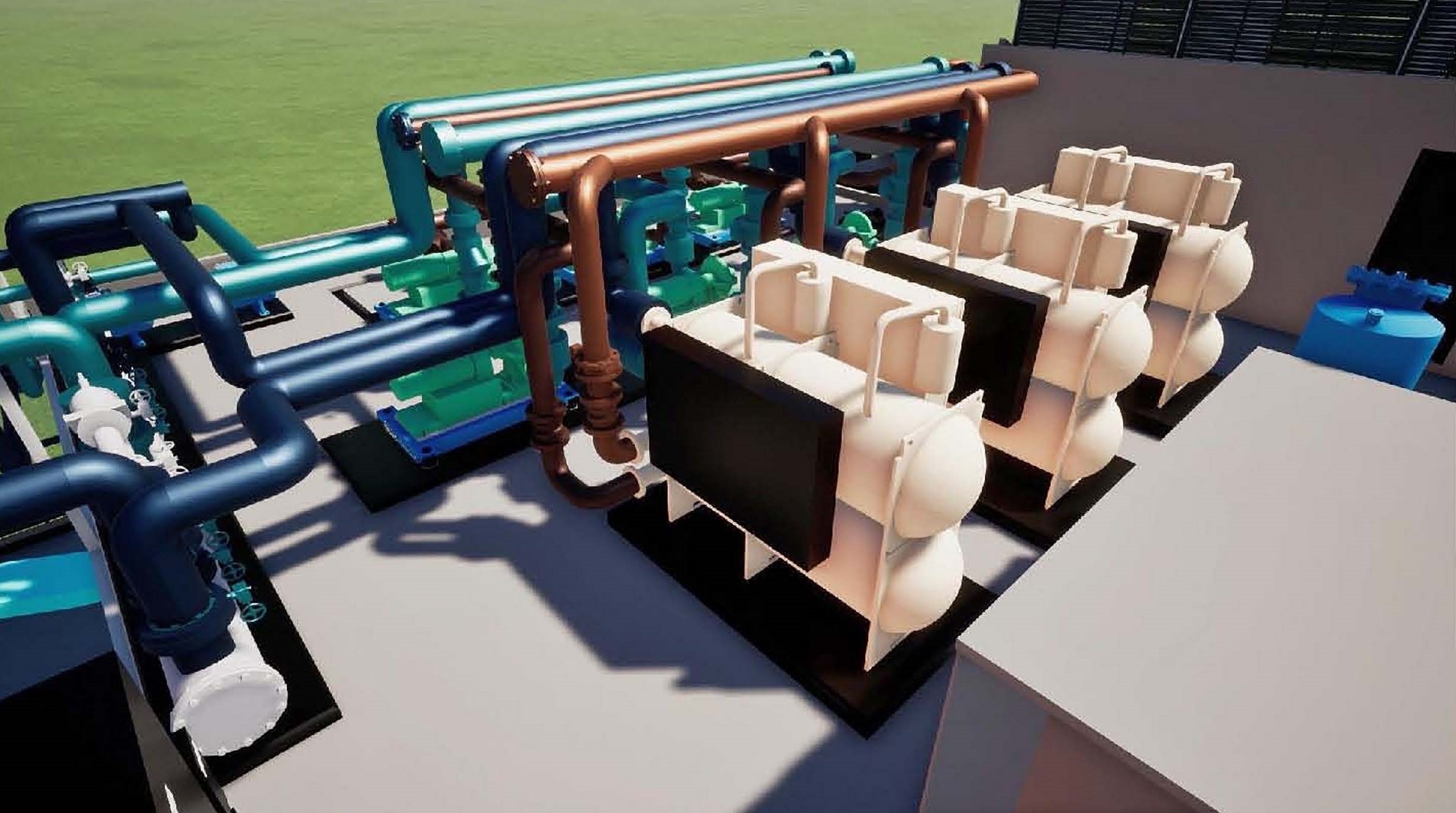
การกำหนดขนาดเครื่องทำน้ำเย็นสำหรับโครงการนี้ ได้แก่ เครื่องทำน้ำเย็น 2 ชุด ขนาดชุดละ 150 ตันความเย็น รวมกำลังการผลิตน้ำเย็น 300 ตันความเย็น เทียบกับภาระความเย็นสูงสุดของอาคารที่ประมาณ 280 ตันความเย็น โดยเครื่องหนึ่งรับผิดชอบวงจรอุณหภูมิต่ำ (DOAS และเซิร์ฟเวอร์) และอีกเครื่องรับผิดชอบวงจรอุณหภูมิสูง (พื้นที่สำนักงานทั่วไป) การแยกเครื่องทำน้ำเย็นออกจากกันนี้ช่วยให้ควบคุมอุณหภูมิน้ำเย็นในแต่ละวงจรได้อย่างอิสระและแม่นยำ ซึ่งเป็นหัวใจหลักของระบบ DTDL
The chiller sizing for this project consists of two chillers at 150 tons of refrigeration each, for a total plant capacity of 300 tons — against a building peak cooling load of approximately 280 tons. One chiller is dedicated to the low-temperature circuit (DOAS and server rooms) and the other to the high-temperature circuit (general office areas). This dedicated arrangement allows truly independent and precise control of the chilled water temperature in each loop, which is the fundamental enabler of the DTDL energy performance advantage.
lant Efficiency Analysis
การวิเคราะห์ประสิทธิภาพโรงผลิตน้ำเย็น (kW/TON) Chiller Plant kW/TON Breakdown — Actual Project Dataการวิเคราะห์ประสิทธิภาพของโรงผลิตน้ำเย็นจะพิจารณาจากค่า kW/TON ซึ่งเป็นการนำกำลังไฟฟ้ารวมที่ใช้ในระบบ (kW) หารด้วยปริมาณความเย็นที่ผลิตได้ (Ton of Refrigeration) ยิ่งค่า kW/TON ต่ำ แสดงว่าระบบมีประสิทธิภาพสูงขึ้น มาตรฐาน ASHRAE กำหนดว่าโรงผลิตน้ำเย็นที่ออกแบบดีในภูมิอากาศร้อนชื้นควรมีค่า kW/TON ต่ำกว่า 0.62 kW/TON ที่สภาวะภาระสูงสุด และระบบ DTDL ของอาคารสภาวิศวกรทำได้ดีกว่ามาตรฐานนี้อย่างมีนัยสำคัญ
Chiller plant efficiency is evaluated using the kW/TON metric — total electrical power consumed by the plant system (kW) divided by the cooling output produced (Tons of Refrigeration). A lower kW/TON value indicates higher system efficiency. ASHRAE standards specify that a well-designed chiller plant in a tropical climate should achieve below 0.62 kW/TON at peak load conditions. The COE building's DTDL plant significantly surpasses this benchmark at both peak and annual average conditions.
ตารางต่อไปนี้แสดงการแจกแจงการใช้พลังงานของอุปกรณ์แต่ละชุดในโรงผลิตน้ำเย็น ณ สภาวะภาระสูงสุด โดยอ้างอิงจากข้อมูลจริงของโครงการ:
The following table presents the energy consumption breakdown for each piece of equipment in the chiller plant at peak load conditions, based on actual verified project data:
| Equipment | Description | Power (kW) | kW/TON |
|---|---|---|---|
| Low Temp Chiller | 7.2°C circuit — DOAS & Server Rooms | 43.36 | 0.155 |
| High Temp Chiller | 10°C circuit — General Office Areas | 96.40 | 0.344 |
| Chilled Water Pump (CHWP) | Chilled water distribution | 10.87 | 0.039 |
| Condenser Water Pump (CWP) | Condenser water circuit | 6.72 | 0.024 |
| Cooling Tower | 1 cell — Heat rejection | 7.50 | 0.027 |
| TOTAL — PEAK EFFICIENCY | — | ~0.589 kW/TON | |
| ANNUAL AVERAGE EFFICIENCY | — | 0.471 kW/TON | |
| อุปกรณ์ | คำอธิบาย | กำลังไฟฟ้า (kW) | kW/TON |
|---|---|---|---|
| เครื่องทำน้ำเย็น (อุณหภูมิต่ำ) | วงจร 7.2°C — DOAS และห้องเซิร์ฟเวอร์ | 43.36 | 0.155 |
| เครื่องทำน้ำเย็น (อุณหภูมิสูง) | วงจร 10°C — พื้นที่สำนักงานทั่วไป | 96.40 | 0.344 |
| เครื่องสูบน้ำเย็น (CHWP) | ระบบจ่ายน้ำเย็น | 10.87 | 0.039 |
| เครื่องสูบน้ำระบาย (CWP) | วงจรน้ำระบายความร้อน | 6.72 | 0.024 |
| หอระบายความร้อน | 1 Cell — การระบายความร้อน | 7.50 | 0.027 |
| รวม — ประสิทธิภาพสูงสุด (Peak) | — | ~0.589 kW/TON | |
| ประสิทธิภาพเฉลี่ยทั้งปี (Annual Average) | — | 0.471 kW/TON | |
จากตารางข้อมูลจะเห็นได้ว่าเครื่องทำน้ำเย็นในวงจรอุณหภูมิต่ำ (7.2°C) ใช้พลังงานเพียง 43.36 kW (0.155 kW/TON) ซึ่งต่ำมากเนื่องจากรับผิดชอบภาระความเย็นเฉพาะ DOAS และห้องเซิร์ฟเวอร์ที่มีขนาดเล็กกว่า ในขณะที่เครื่องทำน้ำเย็นในวงจรอุณหภูมิสูงใช้พลังงาน 96.40 kW (0.344 kW/TON) ซึ่งรับภาระหลักของอาคาร เมื่อรวมกับอุปกรณ์เสริม ได้แก่ เครื่องสูบน้ำเย็น (0.039 kW/TON) เครื่องสูบน้ำระบาย (0.024 kW/TON) และหอระบายความร้อน (0.027 kW/TON) ค่า kW/TON รวมที่สภาวะภาระสูงสุดอยู่ที่ประมาณ 0.589 kW/TON ซึ่งต่ำกว่าเกณฑ์ ASHRAE ที่ 0.62 kW/TON
The data table reveals that the low-temperature chiller (7.2°C circuit) consumes only 43.36 kW (0.155 kW/TON), very low because it handles the smaller DOAS and server room load exclusively. The high-temperature chiller consumes 96.40 kW (0.344 kW/TON), serving as the primary cooling source for general building areas. When combined with ancillary equipment — chilled water pump (0.039 kW/TON), condenser water pump (0.024 kW/TON), and cooling tower (0.027 kW/TON) — the total peak plant efficiency is approximately 0.589 kW/TON, already below the ASHRAE 0.62 kW/TON benchmark.
ที่สำคัญกว่าค่าสูงสุด คือค่าประสิทธิภาพเฉลี่ยทั้งปีที่ 0.471 kW/TON ซึ่งดีกว่าค่าสูงสุดอย่างเห็นได้ชัด เนื่องจากตลอดทั้งปีระบบมักทำงานที่ภาระต่ำกว่าพิกัดสูงสุด และระบบรีเซ็ตอุณหภูมิน้ำเย็นในวงจรสำนักงานทำงานยกอุณหภูมิน้ำเย็นให้สูงขึ้นในช่วงที่อากาศเย็นลงหรือภาระความเย็นน้อย ส่งผลให้เครื่องทำน้ำเย็นทำงานที่ประสิทธิภาพสูงอย่างต่อเนื่อง ค่า 0.471 kW/TON นี้ถือเป็นผลงานที่โดดเด่นมากสำหรับอาคารในประเทศไทย และทำให้โรงผลิตน้ำเย็นแห่งนี้เป็นหนึ่งในที่มีประสิทธิภาพสูงสุดของประเทศสำหรับอาคารขนาดกลาง
More significant than the peak figure is the annual average efficiency of 0.471 kW/TON, substantially better than the peak value. Throughout the year, the plant typically operates below maximum load, and the chilled water reset strategy continuously elevates the high-temperature loop supply temperature during cooler periods or reduced-load conditions, enabling the high-temperature chiller to operate at its best efficiency point consistently. An annual average of 0.471 kW/TON represents outstanding performance for a building in Thailand and establishes this chiller plant as one of the most efficient of its scale in the country.
เทคโนโลยีคอมเพรสเซอร์แบบ Magnetic Oil-Free มีบทบาทสำคัญในการรักษาค่าประสิทธิภาพให้คงที่ตลอดอายุการใช้งาน เครื่องทำน้ำเย็นแบบธรรมดาที่ใช้น้ำมันหล่อลื่นจะมีประสิทธิภาพลดลงเรื่อยๆ เมื่อน้ำมันปนเปื้อนในระบบสารทำความเย็นและเคลือบผิวการถ่ายเทความร้อน แต่เครื่องแบบ Oil-Free ไม่มีปัญหานี้ ทำให้ค่า kW/TON คงที่ในระยะยาว ซึ่งเป็นปัจจัยสำคัญของประสิทธิภาพพลังงานตลอดวัฏจักรชีวิตอาคาร
The Magnetic Oil-Free compressor technology plays a critical role in maintaining consistent efficiency throughout equipment service life. Conventional oil-lubricated chillers experience gradual efficiency degradation as oil migrates into the refrigerant circuit, coating heat transfer surfaces. Oil-Free compressors eliminate this degradation mechanism entirely, ensuring kW/TON values remain stable over the long term — a key factor for lifecycle energy performance.
REES Platinum Certification
การรับรองมาตรฐาน TREES ระดับ Platinum TREES Platinum — Thailand's Green Building StandardTREES (Thai's Rating of Energy and Environmental Sustainability) เป็นมาตรฐานการประเมินอาคารเขียวของประเทศไทย พัฒนาโดยสถาบันอาคารเขียวไทย (TGBI — Thai Green Building Institute) ออกแบบมาเพื่อให้เหมาะสมกับบริบทด้านสภาวะอากาศ สังคม และเศรษฐกิจของประเทศไทยโดยเฉพาะ ไม่ใช่การรับรองมาตรฐานต่างประเทศอย่าง LEED หรือ BREEAM ที่ออกแบบสำหรับภูมิอากาศอื่น อาคารที่ทำการสภาวิศวกรแห่งใหม่ได้รับการรับรอง TREES ระดับ Platinum ซึ่งเป็นระดับสูงสุด แสดงถึงความเป็นเลิศด้านการออกแบบที่ยั่งยืนในมาตรฐานไทย
TREES (Thai's Rating of Energy and Environmental Sustainability) is Thailand's national green building evaluation standard, developed by the Thai Green Building Institute (TGBI). It is specifically designed for the Thai context — addressing climate, social, and economic conditions unique to Thailand — rather than being an adaptation of foreign standards such as LEED or BREEAM. The new COE headquarters achieved TREES Platinum certification, the highest possible rating, signifying outstanding performance across all sustainability dimensions evaluated by the standard.
หมวดหมู่ที่มีความสำคัญที่สุดในการรับรองของโครงการนี้คือ EA1 (Energy & Atmosphere, Criterion 1) ซึ่งเป็นเกณฑ์การประเมินการใช้พลังงานอาคารเทียบกับอาคารอ้างอิงมาตรฐาน ASHRAE ในหมวดนี้มีคะแนนเต็มสูงสุด 16 คะแนน และอาคารที่ทำการสภาวิศวกรได้รับ 14 คะแนน ซึ่งถือว่าเป็นคะแนนที่สูงมากในหมวดนี้ สะท้อนถึงประสิทธิภาพพลังงานที่โดดเด่นของระบบ DTDL
The most critical certification category for this project is EA1 (Energy & Atmosphere, Criterion 1), which evaluates building energy performance against an ASHRAE baseline reference building. This category carries a maximum of 16 points, and the COE building scored 14 points — an exceptionally high score reflecting the superior energy performance of the DTDL chiller plant and the overall building design.
TREES Certification
ระดับการรับรอง: TREES Platinum
ระดับสูงสุดในมาตรฐานอาคารเขียวไทย (TGBI)
Certification level: TREES Platinum
Highest tier in Thailand's national green building standard (TGBI)
EA1 Score
หมวด EA1 ได้ 14 จาก 16 คะแนน
Energy & Atmosphere, Criterion 1
EA1 category score: 14 out of 16 points
Energy & Atmosphere, Criterion 1 — vs. ASHRAE baseline
Energy Reduction
ลดการใช้พลังงาน 31%
เทียบกับอาคารอ้างอิงมาตรฐาน ASHRAE ยืนยันโดยการจำลองพลังงานแบบอิสระ
31% energy reduction vs. ASHRAE baseline — verified by independent third-party energy simulation
เกณฑ์ EA1 กำหนดให้ต้องมีการจำลองพลังงานอาคาร (Energy Simulation) โดยบริษัทอิสระที่ไม่ใช่ทีมออกแบบ (Third-party Independent Verification) เพื่อยืนยันการลดการใช้พลังงานเทียบกับอาคารอ้างอิงตาม ASHRAE 90.1 สำหรับโครงการอาคารสภาวิศวกร การจำลองพลังงานอิสระนี้ยืนยันว่าการออกแบบระบบ HVAC ของอาคาร รวมถึงระบบ DTDL สามารถลดการใช้พลังงานได้ 31% เมื่อเทียบกับอาคารอ้างอิง ซึ่งเป็นตัวเลขที่น่าพอใจอย่างยิ่ง เนื่องจากการลดพลังงาน 31% ในอาคารที่ตั้งอยู่ในภูมิอากาศร้อนชื้นของประเทศไทยต้องอาศัยการออกแบบที่พิถีพิถันและการเลือกใช้อุปกรณ์ที่มีประสิทธิภาพสูงอย่างรอบด้าน
The EA1 criterion requires independent third-party energy simulation — performed by a consultant independent from the design team — to verify the percentage energy reduction compared to an ASHRAE 90.1 baseline reference building. For the COE project, this independent simulation confirmed that the building's HVAC design, including the DTDL chiller plant, achieves a 31% energy reduction against the baseline. This is a remarkable figure, as achieving 31% reduction in a Thai tropical-climate building demands meticulous design decisions and deployment of high-efficiency equipment across all systems.
ปัจจัยสำคัญที่ทำให้เกิดการลดพลังงาน 31% ได้แก่ การเลือกใช้ระบบ DTDL ที่มีประสิทธิภาพสูง การใช้เครื่องทำน้ำเย็นแบบ Magnetic Oil-Free ที่มีค่า kW/TON ต่ำ การออกแบบ DOAS ที่รับผิดชอบการดึงความชื้นอย่างมีประสิทธิภาพซึ่งช่วยให้ยกอุณหภูมิน้ำเย็นในวงจรสำนักงานได้ ระบบควบคุมอัตโนมัติที่ปรับอุณหภูมิน้ำเย็นตามสภาวะอากาศจริง และการเลือกใช้เครื่องปรับอากาศ FCU/FAHU ที่ได้รับการคัดเลือกให้รองรับน้ำเย็นอุณหภูมิสูงได้อย่างมีประสิทธิภาพ
The key contributors to the 31% energy reduction include: the DTDL system's inherently high efficiency; Magnetic Oil-Free chillers with low kW/TON ratings; the DOAS design that handles moisture management and enables the office loop temperature reset; the building automation system continuously adjusting chilled water setpoints based on actual outdoor conditions; and FCU/FAHU terminal units specifically sized and selected to deliver adequate cooling capacity at the elevated 10°C chilled water supply temperature.
ค่าประสิทธิภาพเฉลี่ยทั้งปีที่ 0.471 kW/TON เทียบกับเกณฑ์ ASHRAE ที่ <0.62 kW/TON หมายความว่าระบบ DTDL ของอาคารสภาวิศวกรมีประสิทธิภาพดีกว่าเกณฑ์มาตรฐานถึง 24% ซึ่งเป็นผลงานที่ยอดเยี่ยมอย่างยิ่งสำหรับอาคารในประเทศไทย และยืนยันความสำเร็จของแนวทางการออกแบบ DTDL
The annual average of 0.471 kW/TON against the ASHRAE benchmark of <0.62 kW/TON means the COE DTDL plant outperforms this standard by 24% — an exceptional result that validates the DTDL design philosophy for Thai building conditions and demonstrates measurable excellence beyond compliance.
onclusion
บทสรุป Conclusionระบบผลิตน้ำเย็นแบบ DTDL (Dual Temperature Dual Loop) ที่ออกแบบสำหรับอาคารที่ทำการสภาวิศวกรแห่งใหม่บนถนนลาดพร้าว กรุงเทพมหานคร ได้พิสูจน์แล้วว่าสามารถนำมาใช้อย่างได้ผลจริงในอาคารขนาดกลาง (พื้นที่ประมาณ 9,000 ตารางเมตร 7 ชั้น) ในภูมิอากาศร้อนชื้นของประเทศไทย โดยไม่จำเป็นต้องเป็นอาคารขนาดใหญ่พิเศษจึงจะคุ้มค่าการลงทุน
The DTDL (Dual Temperature Dual Loop) chiller plant designed for the new Council of Engineers Thailand headquarters on Ladprao Road, Bangkok, has demonstrated conclusively that this approach can be deployed effectively in a mid-size building (approximately 9,000 sqm, 7 storeys) in Thailand's tropical climate — it does not require a large-scale building to justify the investment or deliver meaningful results.
ความสำเร็จของโครงการนี้สะท้อนออกมาในตัวชี้วัดหลักหลายด้าน ได้แก่ ค่าประสิทธิภาพเฉลี่ยทั้งปีที่ 0.471 kW/TON ซึ่งดีกว่าเกณฑ์มาตรฐาน ASHRAE (0.62 kW/TON) ถึง 24% การลดการใช้พลังงานอาคาร 31% เทียบกับอาคารอ้างอิงมาตรฐาน ASHRAE ซึ่งได้รับการยืนยันโดยการจำลองพลังงานแบบอิสระ การได้รับการรับรองมาตรฐาน TREES Platinum ซึ่งเป็นระดับสูงสุด และคะแนน EA1 ที่ 14 จาก 16 คะแนน
The project's achievements are reflected in several key metrics: annual average plant efficiency of 0.471 kW/TON, outperforming the ASHRAE benchmark by 24%; a 31% building energy reduction versus the ASHRAE baseline, verified by independent third-party energy simulation; TREES Platinum certification at the highest rating level; and an EA1 score of 14 out of 16 points — all verified and independently confirmed.
ปัจจัยความสำเร็จที่สำคัญสรุปได้ดังนี้: การแยกวงจรน้ำเย็น 2 วงจรทำให้สามารถเพิ่มประสิทธิภาพเครื่องทำน้ำเย็นสำนักงานโดยไม่กระทบต่อการดึงความชื้นจาก DOAS การเลือกใช้เครื่องทำน้ำเย็นแบบ Magnetic Oil-Free ที่มีประสิทธิภาพสูงและคงที่ตลอดอายุการใช้งาน การออกแบบ Air Side ที่เสริมกันระหว่าง DOAS (จัดการความชื้น) กับ FCU/FAHU (จัดการอุณหภูมิ) และระบบควบคุมอัตโนมัติที่ปรับอุณหภูมิน้ำเย็นอย่างต่อเนื่องตามสภาวะจริง ทำให้อาคารสภาวิศวกรเป็นอาคารที่มีโรงผลิตน้ำเย็นที่มีประสิทธิภาพสูงที่สุดแห่งหนึ่งของประเทศไทยสำหรับอาคารในระดับขนาดกลาง
The key success factors: loop separation enables office chiller optimization without compromising DOAS dehumidification; Magnetic Oil-Free technology delivers high and stable efficiency throughout equipment life; the complementary Air Side design pairing DOAS (latent load) with FCU/FAHU (sensible load) enables the temperature reset strategy; and continuous building automation optimization of chilled water setpoints against real conditions. Together, these make the COE building one of Thailand's most energy-efficient chiller plants at the mid-size building scale.
บริษัท เน็กส์ ทูเอ็นดี จำกัด ขอแบ่งปันแนวทางการออกแบบนี้ในฐานะกรณีศึกษาที่แสดงให้เห็นว่า วิศวกรออกแบบระบบ MEP ไทยสามารถออกแบบระบบที่มีประสิทธิภาพสูงกว่ามาตรฐานสากลได้ โดยอาศัยความเข้าใจในบริบทภูมิอากาศและการดำเนินงานของอาคารในประเทศไทย หวังว่าบทความนี้จะเป็นประโยชน์แก่วิศวกรและผู้เกี่ยวข้องในวงการอาคารเขียวและการอนุรักษ์พลังงานของประเทศ
Next 2nd Co., Ltd. shares this design approach as a case study demonstrating that Thai MEP design engineers can deliver systems that exceed international standards by applying deep understanding of Thailand's climate context and building operational requirements. We hope this article serves as a useful reference for engineers, building owners, and practitioners involved in green building and energy conservation in Thailand.
ทีมผู้เขียน Meet the Team




Lat Phrao Road, Wang Thonglang Subdistrict, Wang Thonglang District, Bangkok 10310, Thailand
Tel: +66 86 577 8938 | info@next-2nd.com | www.next-2nd.com